Stewards of America's Waterways
For more than 160 years, McAllister Towing has operated in ports and harbors along the U.S. East Coast. How we treat the environment, our people, and the communities where we work is part of the job.
Read the Report~58%
Reduction in annual fleet emissions since 2007
20,000metric tons
Of CO2 avoided each year by the Bridgeport & Port Jefferson ferry
0
Port state control deficiencies or detentions in 2025
160+years
Family owned and family run
A Cleaner, Smarter Fleet
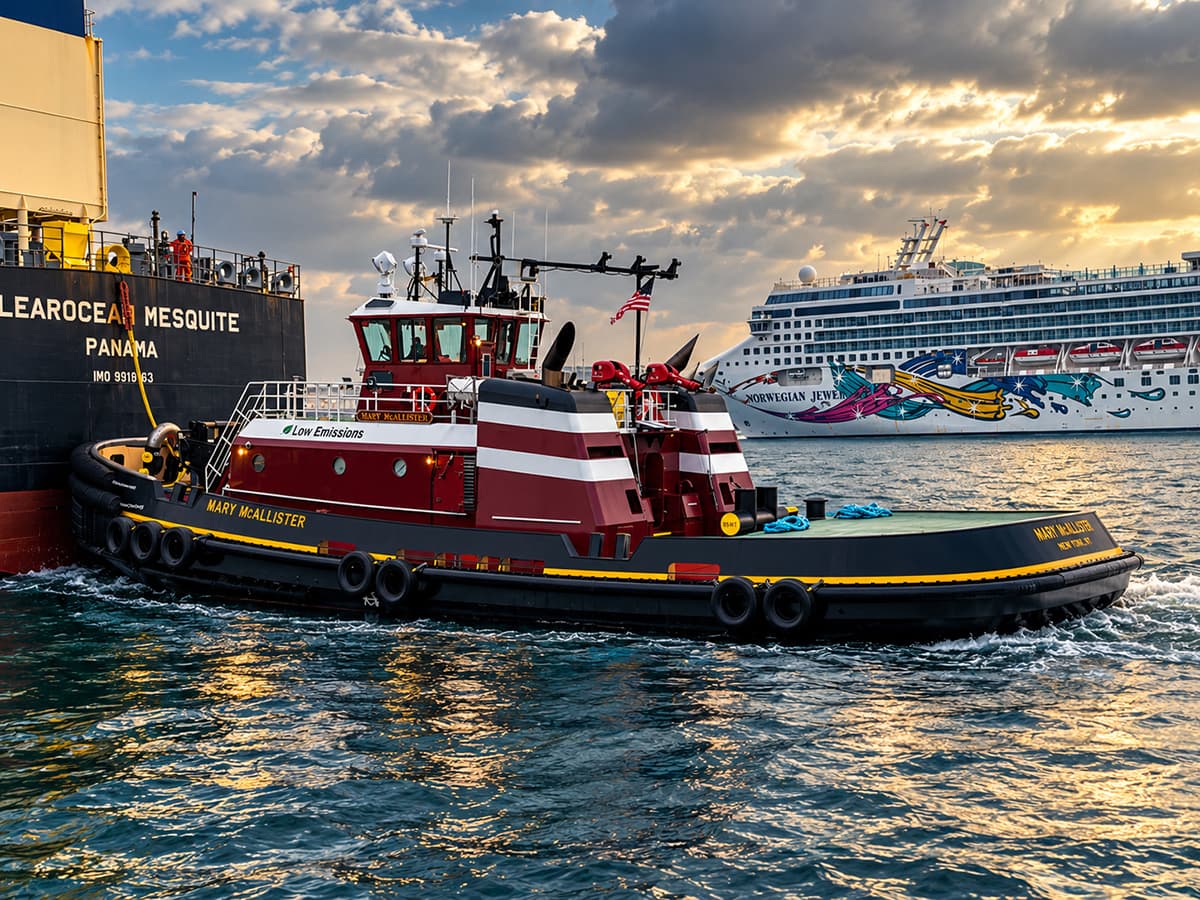
Every tug we have built in recent years runs on EPA Tier IV engines, the cleanest diesel technology available to the marine industry. It cuts nitrogen oxides and particulate matter and burns fuel more efficiently. The newest, the Mary McAllister, is our fourteenth tug with more than 80 tons of bollard pull.
New construction is only part of it. Across the fleet we plan routes, speeds, and tug assignments to reduce idle time and fuel use, and we hold the older vessels to a strict maintenance standard, so they run as cleanly as they were designed to.
Powering the Energy Transition
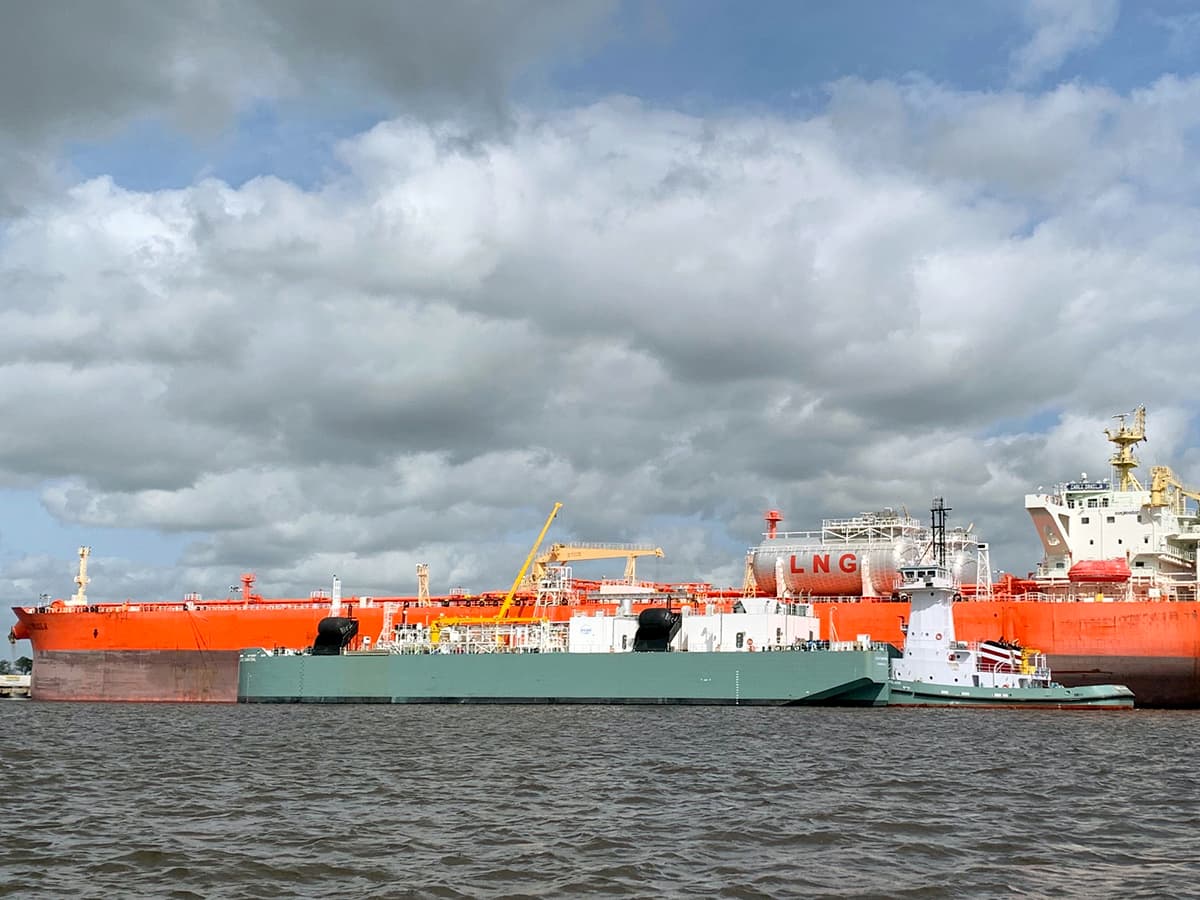
Through the Clean Canaveral, an articulated tug and barge unit operated with Polaris New Energy, McAllister delivers liquefied natural gas directly to LNG-fueled ships at the dock. It is one of the few LNG bunkering services on the East Coast, and it supports customers making the shift to cleaner fuels.
Our vessels also support the offshore wind projects taking shape along the Atlantic coast, including Vineyard Wind, Sunrise Wind, and Coastal Virginia Offshore Wind (CVOW), where our team installed the first Mediterranean mooring in the Port of Norfolk.
The transition reaches our shoreside operations too. In Narragansett Bay, we installed 900 feet of new bulkhead with shore power, so vessels alongside can shut down their engines, plus sewage pumpout to support zero-discharge operations. At the New York Operations Center on Staten Island, which runs around the clock and uses more than 450,000 kilowatt hours a year, the facility is being upgraded with solar panels.
Caring for the Coastline
Our vessels work in some of the most important harbors in the country, and we hold ourselves to strict procedures for fuel handling, spill prevention, waste, and ballast in every one of them.
We are also buying more of the waterfront we operate from. Owning our sites gives us direct control over how they are maintained and improved and lets us bring them up to our own higher standards rather than a landlord's minimum requirements.
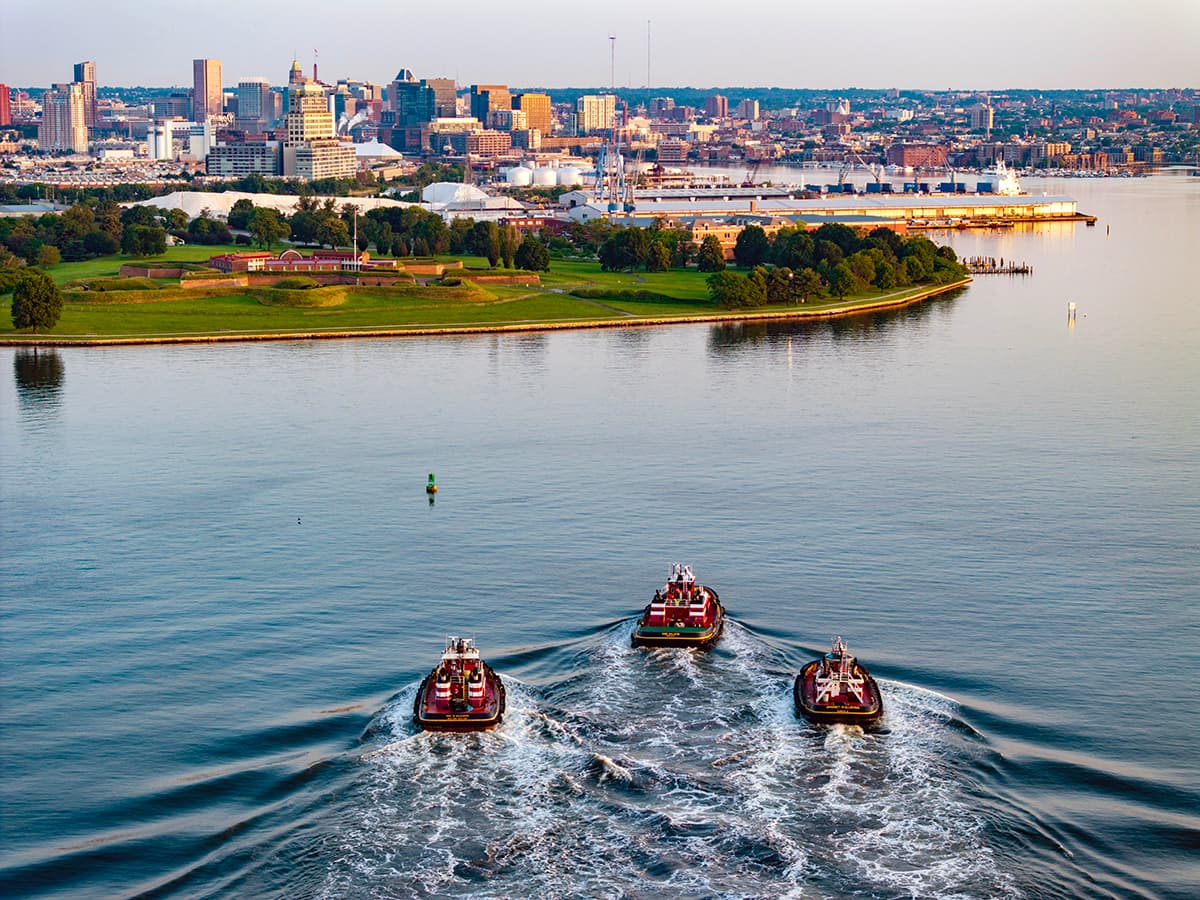
In the Port of Baltimore, McAllister contributed to the port's diesel emissions reduction initiative under an EPA grant, recognized by the EPA, the Maryland Department of the Environment, and the Maryland State Legislature. Retired marine assets have been recycled into artificial reef structures in U.S. coastal waters.
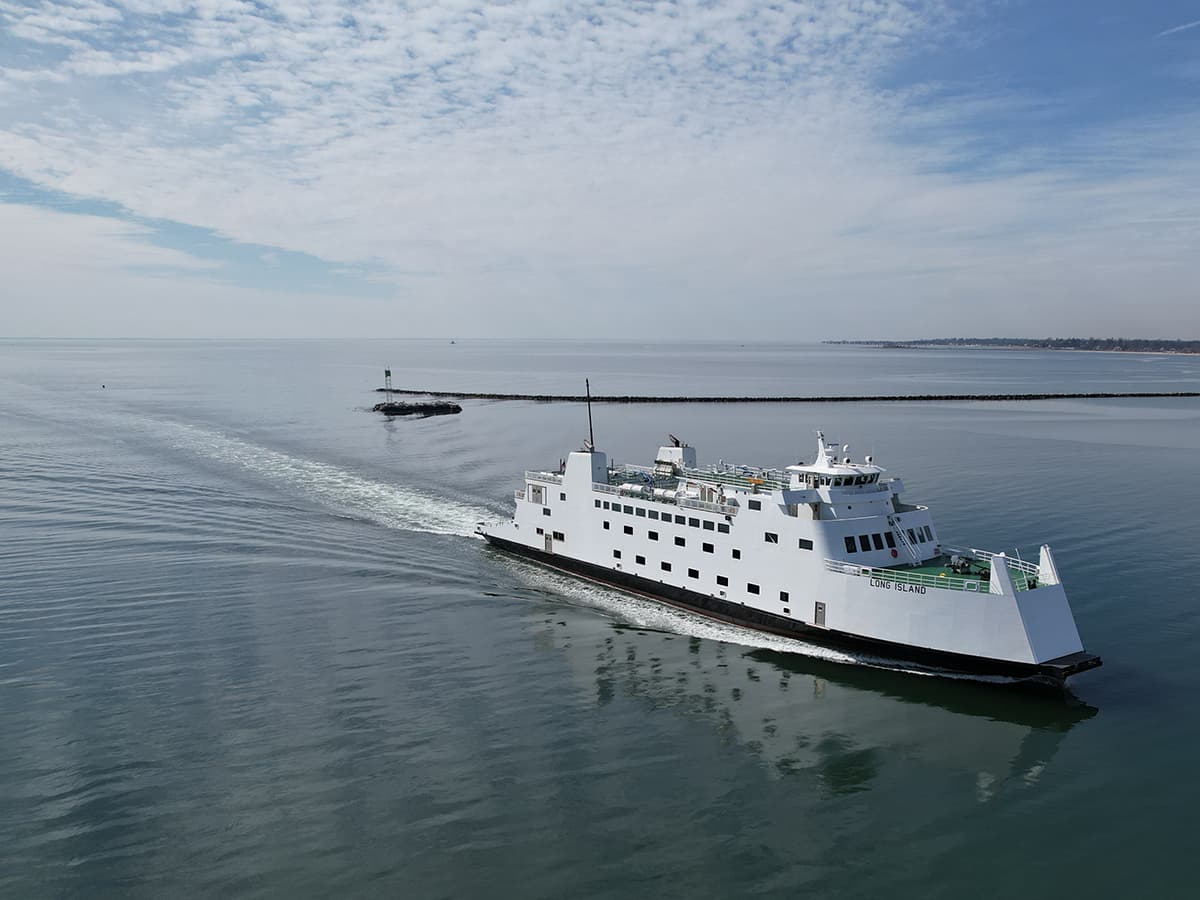
Greener Crossings on Long Island Sound
The Bridgeport and Port Jefferson Steamboat Company, a McAllister company, has operated a year-round ferry service across Long Island Sound since 1883. Today four ferries carry more than 1.2 million passengers a year and take over 500,000 vehicles, including 18,000 trucks, off I-95 and the Long Island Expressway. Compared with the 100-mile drive around, that avoids almost 20,000 metric tons of carbon emissions every year.
The newest of the four, the Long Island Ferry vessel MV Long Island, was named one of WorkBoat's 10 Significant Boats of 2025 and runs on EPA Tier IV main engines.
The same thinking drives our short sea shipping service, which moves containers by water instead of highway. It keeps more than 28,000 truck trips off the road each year and avoids over 30,000 tons of CO2.
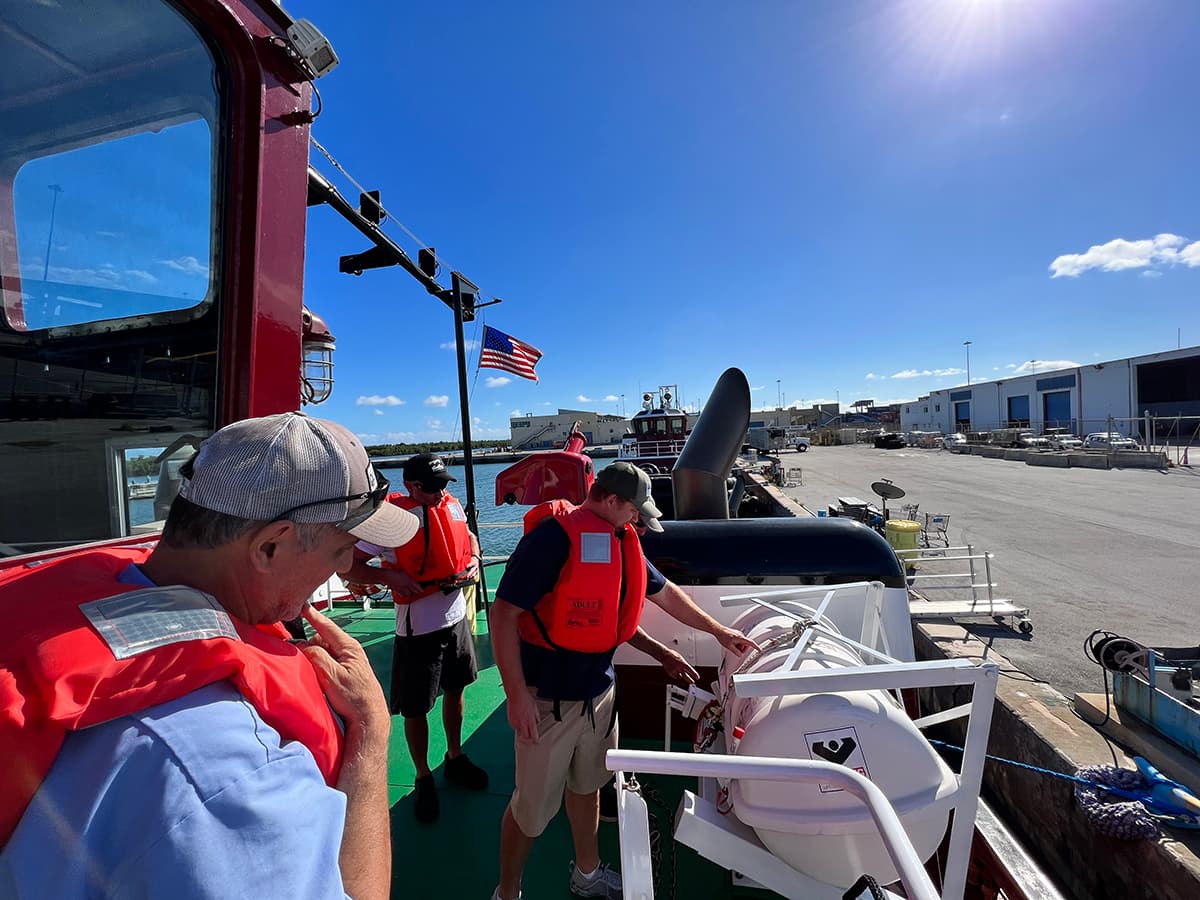
Safety Is How We Work
Marine towing is a people business. McAllister employs 944 people, most of them mariners and shoreside staff who have built long careers here, and every one of them works under a management system covering health, safety, security, quality, and environmental protection. It has been in place for more than 20 years and is independently certified taking into account multiple standards and recognized frameworks, including the ISM Code, the AWO Responsible Carrier Program, and ISO 9001. In 2025 we recorded no fatalities, no high-consequence injuries, and no port state control deficiencies or detentions.
Every employee carries Stop Work Responsibility: the authority to halt any job they believe is unsafe, without reprisal. Our crews train continuously, including high-pressure ship-assist scenarios in the simulators at the Seamen's Church Institute, and in 2025 we delivered more than 4,600 hours of training.
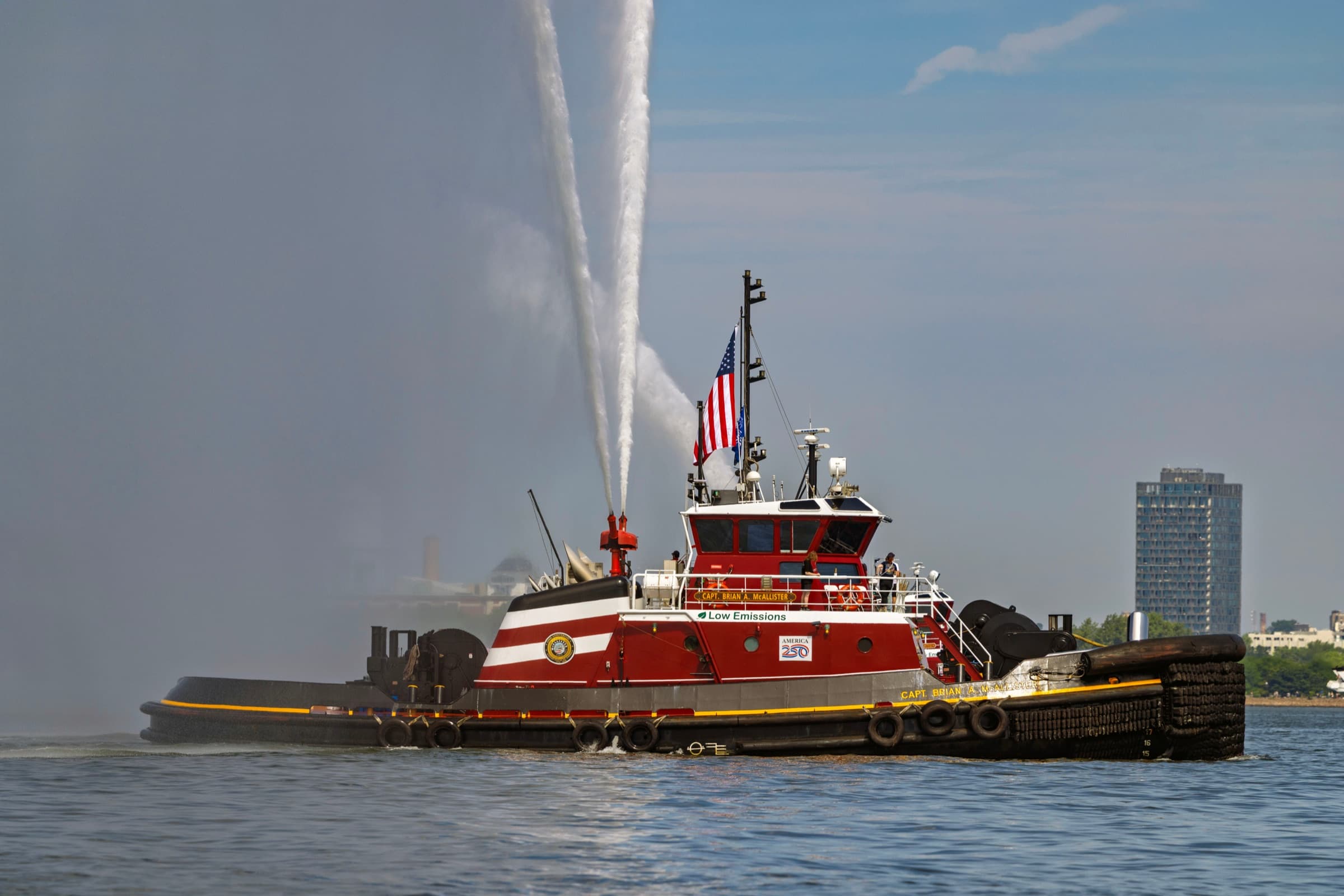
That readiness serves the community too. When a pier fire broke out at the Duraport terminal in New York, our dispatch center sent the rescue tug Capt. Brian A. McAllister, whose crew pumped 11,000 gallons of water a minute onto the fire alongside local responders until it was out. We sponsor Maritime College cadets, run a deckhand training program with the Virginia Maitland Sachs Foundation, and have raised money for Make-A-Wish Maine for years.
How We Do Business
McAllister is a family-owned company in its sixth generation, governed by a board of directors and run by people whose name is on every hull. Being family owned does not mean being informal. Our Standards of Business Conduct and Anti-Bribery Policy has been communicated to every employee and every business partner, and in 2025 there were no incidents of corruption, no legal cases, and no contracts lost to it.
We expect the same of the companies we buy from. A supplier qualification and vetting program screens our vendors for responsible labor and business practices, and 100 percent of employees and suppliers have been trained on our human rights policy.
Protecting the information our customers trust us with is part of the same commitment. Our cybersecurity program follows the NIST Cybersecurity Framework and U.S. Coast Guard maritime security guidance, we are working toward CMMC Level 3, and 2025 closed with zero breaches of customer data.
We report on all of this every year. The 2025 report is our fourth, prepared to the Global Reporting Initiative and SASB Maritime standards, and our leadership serves on the boards of the American Waterways Operators and the Passenger Vessel Association to help shape the standards our industry works to.
Our commitments
We support the United Nations Sustainable Development Goals (SDGs) and focus on the five our operations touch most directly:
Good Health and Well-being (SDG 3). Safety is our core value. We are dedicated to the well-being of our workforce across every operation.
Affordable and Clean Energy (SDG 7). We support the transition to clean energy by investing in more efficient, lower-emission technology.
Decent Work and Economic Growth (SDG 8). We provide a safe workplace for every employee, with continuous training and development.
Climate Action (SDG 13). We work to reduce our carbon footprint by adopting new technology and optimizing how we operate.
Life Below Water (SDG 14). As stewards of the marine environment, we take measures that reduce pollution and preserve marine ecosystems.
As we look to the future, we are excited about the opportunities ahead and remain steadfast in our mission to balance economic growth with environmental stewardship and social responsibility.
Read the ReportRead the Report
Our sustainability report covers our environmental, social, and governance performance for the year, with a full greenhouse gas inventory and safety and workforce data. It also communicates the expectations and standards for ourselves and our suppliers.
Questions about McAllister's sustainability programs:sustainability@mcallistertowing.com or 212-269-3200.